


The Microsoft Surface, A 10.6-Inch Windows 8 Tablet From Microsoft

“It embodies hardware and software working together. People want to work and play,” Steve Ballmer said today amid much fanfare at Milk Studios in downtown Los Angeles. Microsoft has officially entered the ring with Apple.
Microsoft views the Surface as a “stage for Windows 8.” It’s 9.3mm thin, has full size USB 2.0 ports, a massive kickstand and weighs only 1.5 lbs. The casing is made out of magnesium (specifically, a material Microsoft calls VaporMg) and screen is covered in the Gorilla Glass 2 and optically bonded, a feature Microsoft brags was specifically made for the Surface. The Surface is directly aimed at consumers, and with that, the iPad.
Windows 8 is at the core of Surface. As such, it’s Metro device but also has access to all the Windows, not to mention Xbox features. This is clearly the product Microsoft had in mind when it announced the Xbox SmartGlass feature at E3 earlier in the month.
Microsoft also announced several accessories for the Surface including a clever 3mm thick cover that features a full (albeit super-slim) keyboard. Since it’s held on by magnets, it will likely be called a copy of the iPad’s SmartCover, too. The backside of the Surface even features a massive, unit-wide kickstand.
There will be two hardware options for Microsoft’s Surface, with both an ARM option and, for the full Windows experience, an Intel chip.
But like most hardware, it’s nothing without the right software. Ballmer was very clear at the beginning of the announcement event that this tablet’s strength is the Windows ecosystem. This tablet runs Windows 8, and with that, both Metro and the traditional desktop environment. Every application that runs on Windows, save perhaps Skyrim and the like, should run on a x86 Surface.
Still, if Microsoft is attempting to take on Apple, it will need to court a new crop of developers. The iPad’s strength comes from its legions of small 3rd party devs that for the most part completely ignore all things Microsoft. Up until this product, there wasn’t another tablet platform with the same sort of penetration numbers as the iPad. But with the Surface, Microsoft is essentially giving developers a massive user base as the applications will hit both mobile and desktop units — and Metro’s dedication to the touchscreen makes the deal even sweeter.

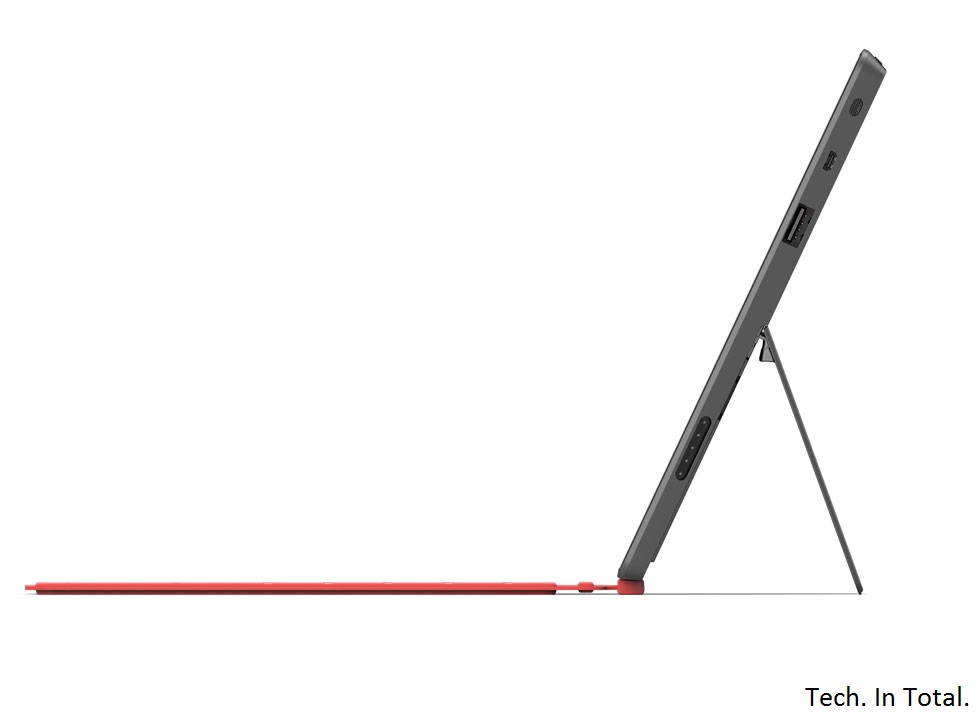


The new Windows RT-powered Surface will sport either 32 or 64GB of storage depending on the purchaser’s preference, while the more traditional Intel variant will come with either 64 or 128GB. Microsoft declined to dive into specifics about their new tablet’s release, though they were quick to note that the Surface tablets would be priced “competitively” when they make it to market.
How to Check If Your LinkedIn Password Was Stolen

Worried that your LinkedIn password may be a part of the nearly 6.5 million compromised on Wednesday? Password management firm LastPass has released a secure tool to see if your password was among the stolen.
News first surfaced about the security breach after a Russian hacker said he stole 6,458,020 encrypted LinkedIn passwords and posted them online (without usernames) to prove his feat. The breach comes on the heels of news that LinkedIn’s iOS app potentially violates user privacy by sending detailed calendar entries to its servers.
LinkedIn confirmed that some passwords had become compromised and said it would contact affected users with details on how to change their password.
Although usernames associated with the passwords were not released, the passwords themselves will surely be used to help reverse-engineer other cryptography systems. We also expect to see these passwords added to dictionary lists of programs that attempt to break into various accounts.
In other words — if you’re a LinkedIn user, no matter how strong your password seemed — it’s a good idea to go ahead and change it.
How This Works
If you’re a cynical web user when it comes to privacy and security — of course you are, right? — then you’re probably asking yourself whether or not a site where you type in your password to see if it’s been compromised could possibly be legit. But the folks at LastPass ensure that the tool is safe and does not store passwords.
Here’s how it works: After typing your LinkedIn password into LastPass’s tool, the service computes its SHA-1 hash and sends the result to LastPass.com. It then searches the list of 6.5 million leaked password hashes.
“All that’s communicated to LastPass is the hash ‚All the result of the one-way function performed on the password that a user enters in that box,” a LastPass spokesperson told us. “So let’s say you enter ‘password1.’ You enter it and the tool performs the hashing algorithm. The hash is then sent to LastPass, and if a match is found in the database (of the 6.46 million leaked hashes) on our end, we report back a message saying that your password was compromised.”
The spokesperson also noted that the hashes are not stored on its servers: “We don’t store the hash on our end. We only perform the check and then delete it.”
Brooklyn developer Chris Shiflett created a near-identical tool called LeakedIn that appears to operate in the exact same way. On his blog, Shiflett discussed how he built the tool to find out his own password was leaked (and subsequently cracked).


Change Your Password
If your password is among the millions stolen, you should not only change it as soon as possible but also update other accounts you have that use the same password.
If you aren’t already using a password management tool — it’s time to start considering one. Tools such as LastPass and 1Password are invaluable in helping users create and manage unique, secure passwords.
Has your password been compromised? Let us know in the comments.
LinkedIn Confirms: Account Passwords Hacked

LinkedIn Wednesday confirmed that at least some passwords compromised in a major security breach correspond to LinkedIn accounts.
Vicente Silveira, Director at LinkedIn, confirmed the hack on the company's blog Wednesday afternoon and outlined steps that LinkedIn is taking to deal with the situation. He wrote that those with compromised passwords will notice that their LinkedIn account password is no longer valid.
Silveira added that owners of compromised accounts will receive an email from LinkedIn with instructions on how to reset their passwords. These owners then will get a second email from LinkedIn customer support that explains the situation at greater length.
Silveira also apologized to those affected, saying LinkedIn takes the security of members very seriously.
The business-focused social network had 161 million users worldwide as of March 31.
Background
LinkedIn Security professionals suspected that the business-focused social network LinkedIn suffered a major breach of its password database. Recently, a file containing 6.5 million unique hashed passwords appeared in an online forum based in Russia. More than 200,000 of these passwords have reportedly been cracked so far.
The file only contains passwords hashed using the SHA-1 algorithm and does not include user names or any other data, security researchers say. However, the breach is so serious that security professionals advise people to change their LinkedIn passwords immediately.
It's unknown at this point how the file ended up on a public forum or exactly which site the passwords originate from; however, signs indicated this is indeed a breach of LinkedIn. Many of the cracked passwords that have been published to the forum have the common term “LinkedIn” in them, Per Thorsheim a security advisor based in Norway
While terms such as Facebook, Twitter and other common online networks are almost nonexistent. Thorsheim was one of the first security researchers to discover the leaked password file.
One common way people create passwords for different websites is to add the name of the site into the passphrase, says Thorsheim. So some people may use the password “1234Facebook” for the world's largest social network, and then “1234LinkedIn” for LinkedIn and so on. With so many occurrences of the term LinkedIn, Thorsheim says, it seems likely these are in fact LinkedIn passwords.
Thorsheim also said he and at least 12 other sources he trusts within the security community have found hashes of their own LinkedIn passwords in the file.
After hearing Thorsheim's story and using a copy of the leaked password file, I also found the hash for my own LinkedIn password after running my passphrase through an SHA-1 hash generator.
What's a Hash?
An SHA-1 hash is an algorithm that converts your password into a unique set of numbers and letters. If your password is “LinkedIn1234,” for example, the SHA-1 hex output should always be “abf26a4849e5d97882fcdce5757ae6028281192a.” As you can see that is problematic since if you know the password is hashed with SHA-1, you can quickly uncover some of the more basic passwords that people commonly use.
Often, random bits--known as salting--are added to a hash so that the output is harder to guess. But that does not appear to be the case with these leaked passwords.
What's also troubling security researchers is that the password database contains entirely unique passwords. It's unclear whether the people who leaked the password file have more passwords that have not surfaced online. The file may, for example, be an attempt to crowd source the hacking of some of the more difficult passwords. It's also unknown if the suspected attackers have user names or other data tying these passwords to actual users.
Regarding this issue, LinkedIn's Silveira wrote: "It is worth noting that the affected members who update their passwords and members whose passwords have not been compromised benefit from the enhanced security we just recently put in place, which includes hashing and salting of our current password databases."
However, since 6.5 million unsalted hashes have been exposed it does not matter how long or difficult to guess your password is, Thorsheim says. Anyone whose password has been exposed is at risk. You can change your LinkedIn password by following this link and clicking the “change” link next to “Password” just below your profile photo.
This has been a tough week for LinkedIn and security. The Next Web recently reported that an opt-in calendar feature in LinkedIn's Android and iOS mobile apps was sending user data back to LinkedIn servers as plain text. LinkedIn responded by saying it sends all data back to its servers via an encrypted connection and never saves any user data.
Windows 8 - Release Preview Available Now

Microsoft Corp appears to be on track to release its new Windows 8 operating system in time for the crucial U.S. holiday shopping season after making a "release preview" of the new code available for download on Thursday. Windows 8 is the latest version of the flagship product, which still provides almost half of the world's largest software company's profit. It is the first version that will run on tablet computers as well as PCs, providing Microsoft's first real challenge to Apple Inc's iPad.
"The progress Microsoft is making leads me to believe that Windows 8 will be available in time for the holiday season this year," said David Johnson, an analyst at tech research firm Forrester. "I've been using the consumer preview for several weeks, and while it's obvious more finishing work is needed, it has been stable and reliable."
Microsoft's release preview is similar to what the software company used to call a "release candidate," meaning the product is all but finished. The next stage is "release to manufacturing," when Microsoft hands the code to PC makers such as HP, Dell and Lenovo to install on new PCs, laptops and tablets.
Based on the timeline for Windows 7 three years ago, Microsoft is on track for full release by October or November, when machines running it will be available in stores. The company has never put a firm date on the release of Windows 8, but says it aims to have a new system every three years. Windows 7 debuted in October 2009.
In the meantime, in order to prevent a drop-off in PC sales, Microsoft said on Thursday that customers who buy Windows 7 PCs between now and January 31 can get an upgrade to Windows 8 Pro for $14.99.
Till then the Windows 8 - Release Preview can be downloaded from HERE
Microsoft's Windows Phone 8 "Apollo" Coming Up in June

Latest Windows Phone 8 rumor suggests that current Windows Phone devices will receive the updateMicrosoft has yet to come forward with a statement of their own regarding the update path of Windows Phone 8. Based on the back and forth rumors, there have been arguments by some prominent names in the industry that have suggested that current Windows Phone 7.5 devices will not see the Windows Phone 8 update, while vague rumors from murky sources have suggested otherwise. Since nothing has been officially announced, at this point in time we guess it could head either way, so if you’re a Windows Phone 7.5 user hoping that your phone will be eligible for the update, here’s a rumor you might be pleased to hear.

According to My Microsoft Life, they have been tipped by one a “trusted source” from Microsoft’s PR firm Waggener Edstrom who apparently revealed that the current batch of Windows Phone devices will be getting the Windows Phone 8 update. No word on what the current batch refers to (could be phones which launched with Mango), but the report goes on to state that this information will be corroborated in the coming weeks via “leaks”. All of this admittedly sounds very suspicious so we suggest that you not read too much into this for now, at least until the alleged “leaks” start to appear that might lend some credence to the rumor. Until then generous doses of salt are recommended.
IBM, SAP Now Support Microsoft‘s Standardization Move

Nearly six years ago one of the most bitter standards battles in all of computing was fought between OASIS, caretaker of the OpenDocument format, and Microsoft. The issue was whether, by making the document formats for Microsoft Office available as open standards, the company was unfairly leveraging Office's broad base of installation to unseat its only real competitor, the storage format behind OpenOffice.
That year, 2006, marked the turning point in Microsoft's public stance towards openness and interoperability. This despite bitter opposition led by IBM, which was working to resurrect the Symphony brand it had acquired through Lotus. IBM argued that Microsoft was undermining the standards process to suit its purposes. Just how much the computing environment has changed since then was made evident today as IBM (whose heart grew three sizes this day) joined with SAP and Citrix in backing a move by Microsoft to declare the OData HTTP-based database interaction prototol - also known as Open Data Protocol - an OASIS standard.
"OData is an application-level protocol for interacting with data via RESTful Web services," reads a white paper on an OData extension for XML published by OASIS (PDF available here). "An OData Service’s contract is defined by simple, well-defined conventions and semantics applied to the data model exposed by the service, providing a high level of semantic interoperability between loosely coupled clients and services."
Phrasing data in XML, ATOM or JSON format does allow it to be visible to many different database engines. They can see data in these formats, so that's not the problem. Essentially, how does a Web client (any browser on any device) request data from any server (any database engine or framework), and then initiate a dialog with that server so it can update or change one or more records? Remember, HTTP is a stateless protocol: Clients make GET requests and the occasional POST statement, and servers acknowledge and, when they can, comply.
So OData enables communication using any of these three formats for data expression, setting up the mechanism for clients to authenticate themselves and enter into a secure dialog. It already works. And as IBM discovered two years ago, OData was pretty much the only way of creating a single Web client for WebSphere data that worked with .NET, AJAX and PHP clients.
While an XML document contains the body of data, expressed explicitly within the markup, OData expresses the schema - the arrangement and relations between data in a database. It also allows for vendor-specific properties that enable features that one vendors database might utilize while another's does not, though these properties are typically flagged within the metadata using obvious vendor-specific tags; for example, sap:filterable.
Writing on behalf of the OData organization today, Microsoft's senior program manager for OData Alex James said today, "With interoperability front and center in OData we saw more and more technology stacks that started to work with it. Now there are a number of companies that use OData in their products to ensure the data they manage is easily accessible beyond the boundaries of their applications. Many of these companies regularly collaborate on the ongoing design effort for OData. While so far we’ve run the OData design process as transparently as we could (sharing designs, taking feedback through the odata.org blog and distribution list, etc.), we are at a point where the level of adoption and the scale at which organizations are betting on OData require a more formal commitment to shared ownership of the design of this protocol."
It’s tempting to draw the conclusion that Microsoft and IBM are “joining forces,” in coalition against a common enemy. The facts are more economic than melodramatic: Waging platform wars, especially over something that should be as ubiquitous as data exchange, costs way too much money. While the Open Office XML/OpenDocument fracas generated plenty of headlines and even sparked a few campaign rallies, it was a drain on both sides’ resources at a time when the platforms supporting both standards – client-side applications – were starting to become obsolete anyway. The fact of the matter is, OData works, and creating a competing format just to rally the troops and produce headlines is a waste of time and money. It’s best that companies pick their battles more wisely. What’s more, IBM, Microsoft, and SAP alike have come to the realization – perhaps a mutual one – that the best platforms are never islands unto themselves
Popular Posts
-
 It's been about three years since Microsoft unveiled a new version of Office, and particularly with Windows 8 just months away from ...
-
 There's general agreement that Sony stumbled out of the gate with the PlayStation 3. Months of intense hype were followed by a la...
-
 Latest Windows Phone 8 rumor suggests that current Windows Phone devices will receive the update Microsoft has yet to come forward wi...
-
Microsoft is holding an invitation-only press event in San Francisco today at which it is expected to debut the next version of its...
-
 Gaming & Gadgets Microsoft kick-started the "next-generation" of gaming on November 22, 2005, when the company release...

